
In This Article
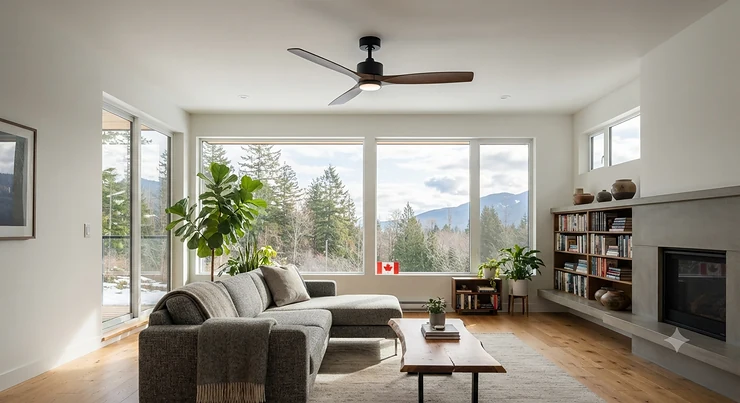
There’s a particular kind of relief that comes from looking up at your ceiling and seeing… nothing extra. No dangling glass shade, no bulb cluster doing its best chandelier impression, just a slim motor housing and three clean blades doing their one job well. That’s the appeal of a minimalist ceiling fan, and if you’ve spent any time scrolling through Scandinavian-inspired living rooms or stripped-back loft renovations, you already know the look: quiet, architectural, almost invisible until it’s spinning.
This guide skips the fluff and gets straight into it. We researched real, currently available fans — from budget-friendly flush-mount units to smart DC-motor statement pieces — and pulled together honest, spec-backed commentary on each one, plus the aggregated sentiment reviewers actually report. What is a minimalist ceiling fan? In short, it’s a fan built around visual restraint: no integrated light kit, a small number of slim blades (usually two or three), a low-profile motor housing, and a finish palette limited to matte black, matte white, or brushed metal.
Whether you’re outfitting a Scandinavian-style bedroom, finishing an industrial loft conversion, or just tired of your fan looking like the loudest object in the room, this roundup will help you choose with confidence. Prices below are shown as ranges in Canadian dollars since Amazon.ca pricing shifts constantly — always check current price before buying.
Quick Comparison Table
| Fan | Blade Span | Motor Type | Best For | Price Range (CAD) |
|---|---|---|---|---|
| Minka-Aire Roto | 132 cm (52″) | AC, 4-speed | Design-forward mid-range buyers | C$300–C$380 |
| Hunter Presto (Matte Black) | 112 cm (44″) | AC, 3-speed | Tight budgets, small rooms | C$140–C$190 |
| Fanimation Kute (Matte White) | 112 cm (44″) | DC, reversible | Smart-home households | C$280–C$360 |
| Honeywell Glen Alden | 132 cm (52″) | AC, pull chain | Rentals and simple installs | C$110–C$150 |
| Modern Forms Wynd | 132 cm (52″) | DC, app-controlled | Tech-forward minimalists | C$450–C$550 |
| Modern Forms Torque | 147 cm (58″) | DC, app-controlled | Premium architectural statements | C$650–C$800 |
| Fanimation Kute (Weathered Wood) | 132 cm (52″) | DC, reversible | Scandinavian and wood-accent decor | C$320–C$400 |
Looking at the spread above, the price gap between the cheapest and priciest option here is roughly five times over, and that gap tracks almost entirely with motor type and smart features rather than blade quality. If your main goal is a clean look on a tight budget, the Honeywell Glen Alden or Hunter Presto get you there without app integration. If you want whisper-quiet DC operation and phone control baked in, you’re realistically looking at the Modern Forms lineup, and that premium is the trade-off worth weighing before you buy.
💬 Just one click — help others make better buying decisions too!😊
Top 7 Minimalist Ceiling Fans: Expert Analysis
1. Minka-Aire Roto — the design world’s quiet obsession
The Minka-Aire Roto has been a go-to for interior designers for years, and once you see it in person, the appeal is obvious: it barely reads as a fan at all. This 132 cm (52″) model runs on a 153mm AC motor with a 22-degree blade pitch, four reversible speeds, and a six-inch downrod included in the box (longer rods are sold separately for higher ceilings). What that pitch angle means practically is a bit more air movement per rotation than the shallower 12-15 degree pitches you’ll find on cheaper fans, so it doesn’t need to spin as fast to move the same volume of air — which also means less motor noise at your everyday speed setting. This is the fan for people who care as much about how the fixture looks powered off as powered on; the brushed aluminum finish reflects ambient light without any bulb involved, which is a neat trick in a north-facing room. Based on the spec comparison with its closest AC-motor competitors, the Roto’s four-speed wall control is fairly basic next to newer app-controlled options, but that simplicity is arguably a feature for buyers who just want a switch that works. Reviewers consistently report that the motor needs a short 24-hour break-in period before it fully quiets down, and once past that, users describe it as smooth and largely silent at low-to-mid speeds. The Minka-Aire Roto carries a limited lifetime motor warranty, which is a meaningful signal of build confidence from a brand with decades in the category.
Pros:
- ✅ Slim architectural profile fits Scandinavian and industrial rooms
- ✅ Lifetime motor warranty backs long-term reliability
- ✅ Multiple finish options including brushed aluminum and matte white
Cons:
- ❌ Needs a 24-hour break-in period before motor fully quiets
- ❌ Basic 4-speed wall control lacks app or smart-home support
Sitting in the mid-C$300s at the time of research, the Minka-Aire Roto earns its price through design pedigree and motor longevity rather than gadgetry — a solid value verdict for buyers prioritizing form over features.

2. Hunter Presto (Matte Black) — best budget entry into the minimalist look
If you want the clean, no-light aesthetic without spending big, the Hunter Presto in matte black is the most obvious starting point. This 112 cm (44″) fan uses Hunter’s SureSpeed AC motor technology, rated by the company’s own testing at over 33% higher air velocity than several leading competitor models, and delivers roughly 2,999 CFM of airflow on its highest of three speeds. In practice, that means a fan sized for smaller bedrooms and home offices punches slightly above its physical size, which matters if you’re trying to avoid installing an oversized fan in a modest room. The three sculpted blades and flush low-profile mount give it the tight-to-ceiling look minimalists want, and the wall control keeps the whole install remote-free and cable-clutter-free. What most buyers overlook about entry-level fans like this one is the trade-off between simplicity and control granularity — three speeds is plenty for most people, but if you’re used to six-speed DC fans, it can feel like a step down. Reviewers consistently note the fan runs quiet at low and medium settings, with a modest hum becoming noticeable only at full speed in smaller rooms. Backed by a limited lifetime motor warranty from a company with over 135 years in the fan business, it’s a low-risk entry point.
Pros:
- ✅ Genuinely affordable way into the no-light minimalist look
- ✅ SureSpeed motor delivers strong airflow for its size
- ✅ Limited lifetime motor warranty from an established brand
Cons:
- ❌ Only three speeds versus six on premium DC competitors
- ❌ Noticeable hum reported by some reviewers at top speed
At around C$140–C$190 depending on finish and retailer promotions, the Hunter Presto is the pick for anyone who wants the minimalist silhouette without spending premium-tier money.
3. Fanimation Kute (Matte White) — best all-rounder for smart-home households
The Fanimation Kute splits the difference between budget AC fans and the pricier app-controlled options, and it does it well. This 112 cm (44″) model runs a DC motor capable of up to 5,490 CFM on high, with three damp-rated blades set at a 16-degree pitch and a compact 35 cm (13.78″) total height that keeps it hugging the ceiling. It ships with a TR305 handheld remote offering variable speeds, sleep timer, and fresh-air functions, and it’s compatible with Fanimation’s Bluetooth fanSync app for phone control (a WiFi receiver is sold separately for full smart-home integration). Here’s what to weigh: DC motors like this one draw meaningfully less power than the AC motor in the Hunter Presto above, so while the upfront cost is higher, the ongoing electricity draw is lower — a genuine total-cost-of-ownership consideration rather than marketing language. The Kute earned an ENERGY STAR Most Efficient 2022 certification, which is a real third-party benchmark, not a self-assigned label. Reviewers consistently praise the DC motor’s quiet operation across all speeds and the damp rating, which opens up covered patios and three-season rooms as install locations, not just dry indoor rooms.
Pros:
- ✅ DC motor is noticeably quieter than comparable AC models
- ✅ Damp-rated for covered outdoor or three-season spaces
- ✅ ENERGY STAR Most Efficient 2022 certified
Cons:
- ❌ WiFi hub for full smart-home control sold separately
- ❌ Higher upfront cost than basic AC alternatives
At roughly C$280–C$360 in matte white or matte black, the Fanimation Kute offers strong long-term value once you factor in the lower running cost of its DC motor.
4. Honeywell Glen Alden (No Light) — simplest install for renters and budget rooms
The Honeywell Glen Alden without light is about as no-nonsense as ceiling fans get. This 132 cm (52″) flush-mount model uses a pull-chain control and a reversible AC motor, with dual-finish blades that let you flip them between two colour options depending on which side faces down — a small but genuinely clever touch for anyone who repaints or restyles a room down the line. What the spec sheet won’t tell you, but the design communicates clearly, is that this fan is built for function-first buyers who don’t need remote control or app integration and just want quiet, dependable air movement at the lowest possible price. The flush mount keeps it tight to low ceilings, which matters in older Canadian homes and apartment units where an 8-foot (2.4 m) ceiling is common. Reviewers consistently describe installation as straightforward, often completed solo in under an hour, and note the pull-chain mechanism as refreshingly simple to operate for anyone unfamiliar with wall controls or apps. It’s not a design showpiece the way the Minka-Aire Roto is, but its clean lines and matte finish keep it from looking dated.
Pros:
- ✅ Lowest price point in this roundup
- ✅ Dual-finish reversible blades add restyling flexibility
- ✅ Simple pull-chain control, no wiring for remote needed
Cons:
- ❌ No remote or app control option
- ❌ Basic AC motor lacks DC-level quiet operation
At around C$110–C$150, the Honeywell Glen Alden is the sensible pick for rental units, guest rooms, or any space where budget matters more than bells and whistles.
5. Modern Forms Wynd — best for tech-forward minimalist bedrooms
The Modern Forms Wynd is built for buyers who want their fan to disappear visually and integrate digitally. This 132 cm (52″) model runs on a silent DC motor that the manufacturer rates as up to 70% more energy-efficient than a comparable AC motor, and it’s controlled through the Modern Forms app alongside a Bluetooth remote with wall cradle included in the box. What most buyers overlook about DC smart fans is that the efficiency gain isn’t just a marketing number — every fan in the line is factory-balanced and sound-tested specifically to eliminate wobble and rattle, which is the single biggest complaint about budget fans running for years without service. On paper this means a fan that not only draws less power but should require less maintenance intervention over its lifespan. It backs that up with a substantial warranty structure: five years on the LED module (if you later add one), two years on finishes, and a lifetime warranty on the motor itself. Reviewers consistently highlight the app’s scheduling and adaptive-learning features, along with genuinely silent operation even at higher speeds, as the standout reasons to pay the premium over AC alternatives.
Pros:
- ✅ Silent DC motor rated up to 70% more efficient than AC
- ✅ Lifetime motor warranty plus multi-year finish warranty
- ✅ App-based scheduling and smart-home integration
Cons:
- ❌ Premium price relative to AC alternatives on this list
- ❌ Full smart features require ongoing app dependency
Priced in the C$450–C$550 range, the Modern Forms Wynd is a strong value pick for anyone already invested in smart-home ecosystems who wants their fan to fit that world too.
6. Modern Forms Torque — premium architectural statement piece
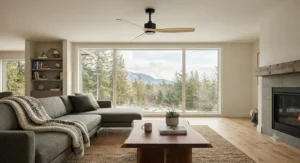
If your ceiling is more of a design feature than an afterthought, the Modern Forms Torque was built with you in mind. This 147 cm (58″) fan pairs a distinctive tapered silhouette with a powerful DC motor and full WiFi connectivity through the Modern Forms app, letting you build schedules and tie the fan into broader smart-home routines from anywhere with an internet connection. The blade shape and finish combinations — matte black solo, or two-tone brushed nickel and soft brass pairings with matte black — read more like sculpture than appliance, which is exactly the point for buyers furnishing an architecturally ambitious space. Here’s what to weigh: at 147 cm, this is meaningfully larger than everything else on this list, so it’s suited to open-concept living rooms and great rooms rather than standard bedrooms; installing it in a small space would overwhelm the ceiling rather than minimize visual clutter. The Torque carries an ENERGY STAR rating and ships with a Bluetooth handheld remote controlling six speeds plus direction reversal. Reviewers consistently note the DC motor’s near-silent operation even at top speed, and several describe the app’s adaptive learning as genuinely useful for cutting energy use without manual adjustment.
Pros:
- ✅ Sculptural design suited to statement architectural spaces
- ✅ ENERGY STAR rated with adaptive-learning smart controls
- ✅ Multiple premium finish combinations available
Cons:
- ❌ Large 147 cm span unsuitable for small or standard rooms
- ❌ Highest price point in this roundup
At roughly C$650–C$800, the Modern Forms Torque is a considered investment for large, design-forward rooms rather than an everyday budget pick.
7. Fanimation Kute (Weathered Wood) — best for Scandinavian wood-accent interiors
The Fanimation Kute also comes in a matte greige finish paired with weathered wood-toned blades, and it’s the most natural fit on this list for Scandinavian home decor specifically. Where matte black and brushed aluminum fans lean industrial, this variant brings warmth without sacrificing the minimalist silhouette — the same 132 cm (52″) sweep, DC motor, and 16-degree blade pitch as its matte-finish sibling, just dressed differently. What most buyers overlook about wood-toned blade finishes is that they’re typically a durable composite or ABS material with a wood-look coating rather than actual solid wood, which is good news for damp-rated durability but worth knowing if you specifically want natural timber. Based on the spec comparison with the matte white Kute above, performance is identical; this is purely a finish decision, and a smart one for anyone building a room around light oak furniture, linen textiles, and the pared-back warmth associated with Scandinavian design. Reviewers consistently describe the wood-tone finish as photographing true to its listing images, with several noting it reads warmer in person than expected from black-and-white product photos. Like its sibling, it includes the TR305 remote and Fanimation Bluetooth fanSync app compatibility.
Pros:
- ✅ Warm wood-tone finish suits Scandinavian and Nordic interiors
- ✅ Identical DC motor performance to the matte-finish Kute
- ✅ Damp-rated composite blades resist warping unlike real wood
Cons:
- ❌ Wood-look finish is composite, not solid timber
- ❌ Limited availability compared to standard black/white finishes
Priced similarly to its sibling at C$320–C$400, the Fanimation Kute in weathered wood is the clear value pick for anyone building a genuinely Scandinavian-styled room.
Practical Usage Guide: Setting Up Your Minimalist Ceiling Fan
Getting the visual payoff of a minimalist fan starts before installation. First, measure your room and match blade span to square footage — a 112 cm (44″) fan like the Hunter Presto suits rooms up to roughly 3.4 m x 3.4 m (11 x 11 ft), while the 147 cm Modern Forms Torque wants a larger great room to avoid looking oversized. Second, check your ceiling height: flush-mount models like the Honeywell Glen Alden work best on standard 2.4 m (8 ft) ceilings, while downrod models like the Minka-Aire Roto need at least 2.7 m (9 ft) of clearance to hang properly without feeling low.
During the first 30 days, run the fan through all its speed settings weekly rather than leaving it on one setting permanently; this helps identify any wobble early while it’s still covered under warranty. A common mistake is skipping the manufacturer’s recommended break-in period for AC motors like the one in the Minka-Aire Roto — running it briefly at first, then extending sessions, helps it settle in quieter than jumping straight to full-time use. For DC models like the Modern Forms Wynd, download the companion app immediately and set up adaptive learning early, since it needs a few weeks of usage data to optimize scheduling. Finally, dust blades monthly with a microfibre cloth; unlike fans with light kits, minimalist no-light fans have fewer crevices to trap dust, but the exposed motor housing on models like the Fanimation Kute benefits from a quick wipe-down to keep the matte finish looking fresh.
Real-World Scenarios: Which Minimalist Fan Fits Your Space
If you’re a renter furnishing a 9×11 bedroom in a Toronto condo with a standard 2.4 m ceiling and don’t want to commit to permanent wiring changes, the Honeywell Glen Alden‘s pull-chain simplicity and flush mount make it the lowest-friction option — install it once, and its dual-finish blades let you restyle later without buying a new fixture. If you’re a young professional working from home who wants a fan that quietly adjusts itself through the day without you touching a switch, the Modern Forms Wynd‘s adaptive-learning app puts it well ahead of manual alternatives, and its DC motor keeps video calls free of background hum. And if you’re renovating a century home in Halifax with exposed beams and want a genuinely Nordic, wood-warmed aesthetic that still moves serious air on humid summer nights, the Fanimation Kute in weathered wood threads that needle between style and function without the premium price tag of the Modern Forms line.
How to Choose a Minimalist Ceiling Fan
- Start with blade span, not brand. Measure your room’s longest wall and match it to the manufacturer’s recommended coverage; oversizing or undersizing undermines the “invisible fixture” effect minimalist fans are meant to create.
- Decide between AC and DC motors early. DC motors like those in the Fanimation Kute and Modern Forms fans cost more upfront but run quieter and more efficiently long-term — factor this into your total cost of ownership, not just sticker price.
- Check your ceiling height and mount type. Flush-mount fans suit low 2.4 m ceilings; downrod models need more vertical clearance to hang without looking cramped.
- Confirm damp or wet rating if it’s going near moisture. Only damp-rated models like the Fanimation Kute belong on a covered porch or three-season room.
- Match control type to your habits. If you’ll actually use an app, DC smart fans pay off; if you just want a switch that works, don’t overspend on features you’ll ignore.
- Look for real warranty terms, not vague promises. Lifetime motor warranties, as offered on the Minka-Aire Roto and Modern Forms Wynd, are a meaningful signal of manufacturer confidence.
- Verify CSA or ETL certification before buying. Any fan sold for Canadian installation should carry recognized safety certification — more on this below.
Modern Ceiling Fan No Light vs Fans With Light Kits
The core trade-off here isn’t really about aesthetics alone — it’s about airflow efficiency. A dedicated modern ceiling fan no light model, like the Hunter Presto or Honeywell Glen Alden, is engineered purely around moving air: the motor, blades, and housing are tuned for that single job without the added weight and drag of an integrated light fixture. Fans built with light kits generally carry a heavier motor housing to support the bulb assembly, which can mean a slightly different weight distribution and, in some cases, marginally reduced airflow efficiency per watt compared to a no-light equivalent of similar size. The other consideration is layered lighting: pairing a no-light fan with recessed pot lights or floor lamps gives you independent control over cooling and illumination — you can run the fan on a warm evening while keeping the room dim for a movie, which isn’t possible with a combined light-and-fan switch. The trade-off is that a no-light fan requires your room to already have another light source planned, so it’s a decision best made at the design stage, not after the fixture is already ordered.
Industrial Ceiling Fan Without Light: A Closer Look
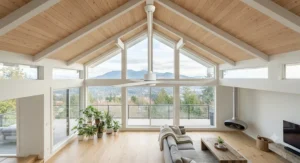
Industrial-style ceiling fans without lights lean into exposed materials — brushed aluminum, matte black steel, and visible motor housings that don’t try to hide their mechanical nature. The Minka-Aire Roto is the clearest example on this list, with its brushed aluminum finish and unapologetically simple blade design that wouldn’t look out of place in a converted warehouse loft. What sets an industrial pick apart from a purely Scandinavian one is finish and blade shape: fewer curves, more straight edges, and metallic rather than warm wood tones. Reviewers consistently describe industrial-style fans as pairing well with exposed brick, concrete ceilings, and black-framed windows — the kind of spaces where a fussy, ornate fixture would clash immediately. If your room already leans industrial in its bones, choosing a fan that matches rather than fights that aesthetic makes the fixture feel intentional instead of like an afterthought bolted to the ceiling.
Minimalist Ceiling Fans for Scandinavian Home Decor
Scandinavian home decor is built around light, warmth, and restraint — pale woods, soft neutrals, and a deliberate absence of visual clutter, principles closely tied to the broader design philosophy explored on Wikipedia’s overview of Scandinavian design. A ceiling fan that fits this world needs to avoid stark industrial coldness while still keeping its profile slim. The Fanimation Kute in weathered wood is purpose-built for exactly this pairing: the same clean three-blade silhouette as its matte-finish sibling, but with a warm, wood-toned composite blade that echoes the pale oak flooring and linen textiles common in Nordic-inspired rooms. Based on the spec comparison, there’s no performance sacrifice for choosing the warmer finish — you get identical DC motor output and damp rating either way. What most buyers overlook is that Scandinavian styling isn’t just about colour; it’s about restraint in form too, which is why a three-blade fan with no light kit tends to read as more authentically Scandinavian than a five-blade fan with an ornate glass shade, regardless of finish.
Minimalist Interior Design and the Role of Ceiling Fans
Minimalist interior design treats every visible object as a decision, and a ceiling fan is one of the largest fixed objects in most rooms — which is exactly why it’s worth this much attention. The core idea, as widely discussed in design literature including Wikipedia’s entry on minimalism, centres on removing anything that doesn’t serve a clear purpose. Applied to ceiling fans, that means stripping away the light kit if you already have adequate lighting, choosing a limited blade count over an ornate five- or six-blade design, and selecting a finish that recedes into the ceiling rather than announcing itself. The Modern Forms Torque and Minka-Aire Roto both achieve this differently — one through sculptural minimalism that still draws the eye deliberately, the other through near-invisibility. Neither approach is wrong; the right call depends on whether your room wants a quiet focal point or genuinely wants the fan to disappear.
Modern Architecture Fans: Form Meets Function
Modern architecture fans borrow their design language directly from contemporary building design: clean geometric lines, a limited material palette, and a refusal to disguise mechanical function behind decoration. This is where fans like the Modern Forms Wynd and Modern Forms Torque genuinely stand out, since their DC motor housings are engineered to be visually part of the design rather than something to conceal. What the spec sheet won’t tell you, but the design intent makes clear, is that these fans are meant to be looked at directly, not hidden — which is a meaningful departure from decades of ceiling fans designed to blend in or disappear. If your home has open-concept architecture, exposed structural elements, or floor-to-ceiling windows, a fan that leans into that visual language, rather than fighting it with a traditional ornate design, tends to feel far more cohesive with the space overall.
Common Mistakes When Buying a Minimalist Ceiling Fan
The most frequent mistake is buying based on photos alone without checking blade span against room size — a fan that looks perfectly proportioned online can look either lost or oversized once it’s actually installed. A close second is skipping the CFM (cubic feet per minute) airflow spec entirely; two fans can look nearly identical while one moves noticeably more air, and that number matters more than blade count for actual comfort. Buyers also frequently underestimate downrod length requirements on vaulted or high ceilings, ending up with a fan that hangs either too low or, more commonly, too high to move air effectively through the room. Another overlooked detail is ignoring damp or wet ratings when installing in a covered porch or three-season sunroom — a standard indoor-rated fan in that environment risks motor failure well before its expected lifespan. Finally, some buyers assume “no light” automatically means “budget,” when in fact several premium DC smart fans on this list, like the Modern Forms Torque, skip the light kit entirely while commanding a price well above basic light-equipped alternatives.
Long-Term Cost & Maintenance
Total cost of ownership on a ceiling fan isn’t just the sticker price — it’s sticker price plus roughly a decade or more of electricity draw plus any parts replacement. A basic AC motor fan like the Hunter Presto typically draws more wattage at comparable airflow than a DC motor fan like the Fanimation Kute or Modern Forms Wynd, and over years of regular seasonal use, that difference compounds into real savings on your electricity bill, particularly with rates varying by province. According to Natural Resources Canada, an ENERGY STAR certified ceiling fan uses roughly 60% less energy on average than a standard model, which is a useful benchmark when comparing the AC options on this list against the certified DC alternatives. Maintenance costs stay low across the board for no-light fans specifically, since there’s no bulb to eventually replace — a small but real advantage over light-kit fans that need occasional LED module swaps. Realistically, budget fans like the Honeywell Glen Alden may need bearing or motor replacement sooner than premium DC options backed by lifetime motor warranties, so the higher upfront cost of something like the Minka-Aire Roto or Modern Forms Wynd can offset itself over a long enough ownership window.
Safety, Regulations & Compliance Guide for Canadian Homes
Any electrical fixture installed in a Canadian home, including ceiling fans, needs to meet recognized safety certification before it’s legally connected to household wiring. In practice, that means looking for a CSA or ETL mark on the packaging or product listing — both are accepted certification bodies under Canada’s electrical safety framework, and products bearing these marks have been independently tested against Canadian Electrical Code requirements, as detailed on the CSA Group’s own history and standards page. All seven fans in this roundup carry ETL or equivalent listing. Beyond electrical certification, it’s worth checking your municipality’s building code requirements if you’re installing a fan on a sloped or vaulted ceiling, since improper downrod length or mounting hardware on an angled surface is a genuine safety concern, not just an aesthetic one. If you’re not comfortable running new electrical box support (fan-rated boxes are required, not standard light fixture boxes), hiring a licensed electrician for installation is worth the modest cost — a fan that isn’t properly supported can wobble loose over time regardless of how well-built the motor itself is.
Problem → Solution: Common Ceiling Fan Pain Points
Problem: The fan wobbles even after installation. This is almost always a balance issue, not a defect — most manufacturers, including Minka-Aire, include balancing kits, and the fix usually takes under ten minutes once you isolate which blade is off.
Problem: The room still feels warm even with the fan running. Check your blade span against room size first; an undersized fan like a 112 cm model in a large open room simply can’t move enough air. Consider a larger option like the Modern Forms Torque for bigger spaces.
Problem: You want smart control but bought a basic AC fan. Retrofit smart switches exist for standard wall controls, though they won’t unlock true multi-speed app control the way a purpose-built DC fan like the Fanimation Kute does natively.
Problem: The finish looks cold and clashes with a warm-toned room. This is a design mismatch, not a functional flaw — swapping to a wood-tone option like the Fanimation Kute in weathered wood often solves it without replacing the whole fixture.
Problem: Installation feels intimidating without electrical experience. Flush-mount, pull-chain models like the Honeywell Glen Alden are generally the simplest DIY install in this roundup; anything requiring new wiring for a wall control is a better candidate for a licensed electrician.

FAQ
❓ Do minimalist ceiling fans without lights cost less than ones with lights?
❓ What blade span do I need for a small bedroom?
❓ Are DC motor ceiling fans worth the extra cost?
❓ Can a minimalist ceiling fan be installed on a sloped ceiling?
❓ Do I need a light kit if I'm buying a no-light fan?
Conclusion
Choosing a minimalist ceiling fan really comes down to three honest questions: how big is your room, how much control do you actually want, and what finish will make the fixture feel like part of the design rather than an interruption of it. Budget-focused buyers land well with the Honeywell Glen Alden or Hunter Presto, both of which deliver the clean, no-light silhouette without asking much of your wallet. Anyone leaning into Scandinavian or Nordic styling should look hard at the Fanimation Kute in weathered wood, while industrial and architecturally bold spaces are better served by the Minka-Aire Roto or the statement-making Modern Forms Torque. If smart-home integration and long-term efficiency matter most, the Modern Forms Wynd offers a genuinely compelling middle ground between premium performance and manageable pricing.
Whichever you choose, remember that pricing on Amazon.ca shifts regularly, so always check current pricing and availability before finalizing your decision — and measure twice, since a fan that’s the wrong size undermines the whole minimalist effect you’re going for.
✨ Don’t Miss These Exclusive Deals!
🔍 Take your home cooling setup to the next level with these carefully selected fans. Click on any highlighted product to check current pricing and availability on Amazon.ca. These picks will help you create a genuinely calm, clutter-free ceiling your whole household will love!
Recommended for You
- Ceiling Fan Chandelier Light: 7 Best Picks for 2026 (Canada)
- 7 Best flush mount ceiling fan with light Picks for Canadian Homes (2026)
- 7 Best Dimmable Ceiling Fan Lights in Canada
Disclaimer: This article contains affiliate links. As an Amazon Associate, I earn from qualifying purchases. If you purchase products through these links, we may earn a small commission at no additional cost to you.
✨ Found this helpful? Share it with your friends! 💬🤗
