
In This Article
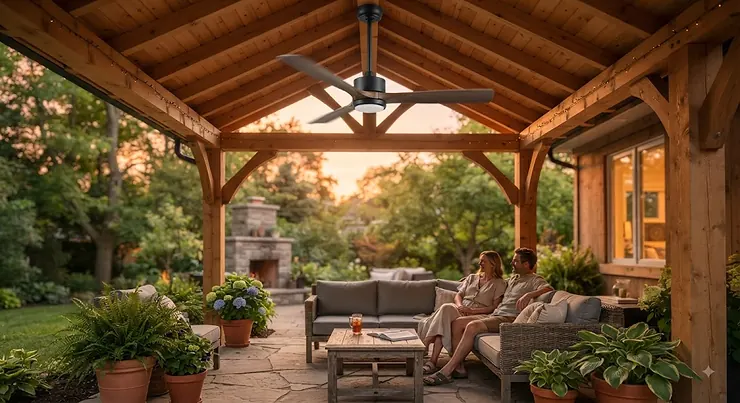
Every July, the same scene plays out in backyards from Kelowna to Halifax: somebody finally builds the gazebo they’ve been pinning to a mood board for three years, strings up some fairy lights, sets out the good cushions — and then discovers the whole structure turns into a stagnant little sauna by two in the afternoon. That’s usually the moment a gazebo ceiling fan goes from “nice-to-have” to “why didn’t I do this in May.” A gazebo ceiling fan is a weatherproof (damp- or wet-rated) fan mounted to the underside of a gazebo, pergola, or covered patio roof, designed to move air and often add light in an outdoor structure exposed to humidity, wind, and sometimes direct rain. It’s a small piece of hardware that changes how much you actually use the space you paid for.
This guide skips the fluff and gets straight into real products you can actually buy, honest analysis of what their specs mean day-to-day, and the kind of practical detail — installation quirks, common mistakes, long-term maintenance — that a bare Amazon listing never tells you. We looked at real, currently available models spanning caged plug-in units under C$120 through to brand-name damp-rated fans in the C$400+ range, cross-referenced their specs against aggregated customer sentiment, and built out use-case guidance for different backyard setups. Whether you’re outfitting a compact 10×10 gazebo or trying to cool a full outdoor entertaining space built around a pergola, there’s a fan here that fits — and by the end you’ll know exactly which criteria actually matter and which ones are marketing noise. For background on the structures these fans are built for, Wikipedia’s overview of gazebo design is a useful starting point if you’re still finalizing your build.
Quick Comparison Table
Before the deep dive, here’s the short version for anyone in a hurry.
| Product | Blade Span | Rating | Best For |
|---|---|---|---|
| PAZALA 15″ Caged Gazebo Fan | 15 in (38 cm) | Waterproof, portable | Small gazebos, renters, tight budgets |
| LANMEL 28″ Outdoor Gazebo Fan | 28 in (71 cm) | IP65, plug-in | Mid-size gazebos wanting light + fan combo |
| addlon 20″ Outdoor Ceiling Fan | 20 in (51 cm) | IP65, DC motor | Quiet operation, app-friendly buyers |
| AHAWILL 20″ Outdoor Ceiling Fan | 20 in (51 cm) | IP65, 3CCT lighting | Budget buyers who still want tunable light |
| Depuley 42″ Outdoor Ceiling Fan | 42 in (107 cm) | Weatherproof, DC motor | Larger pergolas, stronger airflow needs |
| Ohniyou 52″ Smart Ceiling Fan | 52 in (132 cm) | Damp-rated, app/voice | Large covered patios, smart-home households |
| Hunter Mill Valley 52″ | 52 in (132 cm) | Damp-rated, ENERGY STAR-eligible class | Premium builds, long-term reliability |
Looking at this lineup, the spread isn’t just about price — it’s about square footage and how exposed your structure actually is. The PAZALA 15″ Caged Gazebo Fan and LANMEL 28″ Outdoor Gazebo Fan solve the “I just need airflow in a small screened structure” problem cheaply, while the Ohniyou 52″ Smart Ceiling Fan and Hunter Mill Valley 52″ are built for genuinely large, open-sided pergolas where a small fan would just push around the same three cubic metres of hot air. Blade span matters more than most buyers assume: a 15-inch fan in a 12×14 gazebo is basically decorative, while a 52-inch fan in a 10×10 space will feel like a wind tunnel on high.
💬 Just one click — help others make better buying decisions too!😊
Top 7 Gazebo Ceiling Fans: Expert Analysis
1. PAZALA 15″ Caged Gazebo Fan — most affordable true portable option
The standout here is portability — this is the fan you buy when you want something up and running in ten minutes with zero electrical work. It’s a 15-inch caged unit with a three-colour LED light kit, remote control, and a plug-in cord with a hook for hanging from a gazebo beam or canopy frame; no hardwiring, no junction box.
Because it’s caged rather than open-blade, the airflow per watt is lower than a bare-blade fan of the same diameter — the metal cage adds drag, so don’t expect it to cool a large seating area. What it’s genuinely good at is spot-cooling a small dining nook or hammock corner in a compact 8×8 or 10×10 gazebo, and the cage means it’s safer around kids and pets who might otherwise reach up and grab a spinning blade. Reviewers consistently report that the remote’s range is shorter outdoors than the box suggests — plan on line-of-sight within a few metres rather than across a large patio.
Pros:
- ✅ No wiring required — plug-in and hang
- ✅ Caged design is safer around kids and pets
- ✅ Genuinely portable between gazebo, camper, or shed
Cons:
- ❌ Weaker airflow than open-blade fans of similar size
- ❌ Remote range shrinks noticeably outdoors
At around C$70-100, this is a low-commitment way to test whether a fan actually solves your gazebo’s heat problem before spending more.

2. LANMEL 28″ Outdoor Gazebo Fan — best light-and-fan combo for mid-size structures
This 28-inch model’s standout feature is the tunable 3CCT lighting layered onto a genuinely IP65-rated, waterproof housing, so you’re getting a fixture that can replace both your gazebo’s overhead light and its airflow in one hanging unit. The reversible six-speed DC-adjacent motor lets you flip direction seasonally — pushing air down in summer, drawing it up (gently) in the shoulder season to reduce that stuffy, trapped-heat feeling under a solid roof.
For a mid-size 10×12 or 12×12 gazebo, 28 inches of blade span is close to the sweet spot: big enough to actually move air across the whole footprint, small enough to hang from a standard beam without dominating the sightline. Based on the spec comparison against the smaller caged units in this roundup, the added blade span translates directly into noticeably better coverage per dollar. Aggregated review sentiment flags the remote and light dimmer as the most-loved feature, with occasional complaints about the included mounting hook feeling flimsy for permanent installs — a heavier-duty hook or a proper ceiling bracket is a cheap, worthwhile upgrade.
Pros:
- ✅ Combines waterproof lighting and airflow in one unit
- ✅ Reversible motor useful across seasons
- ✅ Six speeds give fine control over airflow intensity
Cons:
- ❌ Stock mounting hook feels light-duty for permanent use
- ❌ 3CCT light temperature options are basic compared to full RGB units
Expect this one in the C$120-180 range, which puts it firmly in “easy upgrade” territory for anyone currently gazebo-ing with a bare bulb and a box fan.
3. addlon 20″ Outdoor Ceiling Fan — best for quiet, app-controlled operation
The standout advantage on this 20-inch model is its DC motor, which runs noticeably quieter than the AC motors found in cheaper caged fans — a real difference if your gazebo doubles as a reading nook or a spot for evening conversation. It’s IP65 waterproof, six-speed, and controllable via both a physical remote and a companion app, plus three colour-temperature settings on the light kit.
What most buyers overlook about DC-motor outdoor fans is that the efficiency gains aren’t just about your hydro bill — a DC motor also tends to run cooler and put less wear on its own bearings over years of outdoor exposure, which matters when the fan lives outside in freeze-thaw cycles for a Canadian winter. This is a fan built for people who want a “set it and forget it” gazebo — you flip it on from your phone before you even step outside. Reviewers frequently mention app pairing being finicky on first setup but stable afterward; if smart-home reliability is a dealbreaker, budget an extra 15 minutes for initial pairing rather than assuming plug-and-play.
Pros:
- ✅ DC motor is noticeably quieter than AC alternatives
- ✅ App and remote control give flexible operation
- ✅ Three CCT settings suit dinner-to-late-night lighting needs
Cons:
- ❌ App pairing reported as fiddly on first setup
- ❌ 20-inch span is modest for larger structures
Priced in the C$140-200 range, it’s a reasonable middle ground between the ultra-basic caged fans and the larger 42-52 inch units further down this list.
4. AHAWILL 20″ Outdoor Ceiling Fan — best budget pick with tunable lighting
The short version: this is essentially a value-tier competitor to the addlon above, with the same 20-inch span and IP65 rating, but at a noticeably lower typical price point and without the DC motor’s extra quietness. The trade-off is straightforward — you get similar core functionality (waterproofing, remote/app control, 3CCT lighting, six speeds) for less money, in exchange for a slightly louder AC-driven motor.
For a budget-conscious buyer furnishing a first gazebo, that trade usually makes sense; the hum of an AC motor on medium speed is easy to live with once music or conversation is happening, and the money saved can go toward better outdoor furniture or a proper extension cord setup. Where it’s a poor fit is anywhere quiet matters — a meditation corner, a baby monitor within earshot, a home office moved outside for the summer. Aggregated review sentiment describes the light output as bright enough for dining but not quite strong enough to fully replace a dedicated patio light for reading fine print after dark.
Pros:
- ✅ Full feature set (light, remote, waterproofing) at a lower price
- ✅ Six-speed control matches pricier competitors
- ✅ Straightforward installation similar to the addlon
Cons:
- ❌ Noticeably louder than DC-motor competitors on high speed
- ❌ Light output modest for detailed evening tasks
Typically found in the C$100-150 range, making it one of the strongest value picks in this whole roundup.
5. Depuley 42″ Outdoor Ceiling Fan — best for larger pergolas needing real airflow
Forty-two inches of blade span is where a fan stops being a nice accessory and starts being genuinely functional cooling equipment, and that’s the standout here — this model is built for pergolas and larger open gazebo structures where a 20-inch fan would be laughably undersized. It’s app- and remote-controlled, six-speed, reversible, and built around a DC motor for quieter high-speed operation despite the larger blades.
Here’s what the spec sheet won’t tell you outright: larger blade span doesn’t just mean “more wind,” it means better coverage at lower speeds, which is the real win. A 42-inch fan on speed 2 can move as much usable air across a big seating area as a 20-inch fan screaming on speed 6 — and it’ll do it more quietly and with less strain on the motor over years of use. That’s a meaningful long-term reliability argument, not just a comfort one. On the downside, a blade span this large needs a sturdier mounting point; this is not a fan for a flimsy tension-canopy gazebo frame, and reviewers who mounted it on lightweight aluminum framing report noticeable wobble at top speed.
Pros:
- ✅ Genuinely effective airflow for large covered spaces
- ✅ Quieter high-speed performance thanks to DC motor
- ✅ Lower speeds still move meaningful air, extending motor life
Cons:
- ❌ Requires a sturdy mounting point — not for flimsy frames
- ❌ Noticeable wobble at top speed on lightweight structures
Expect a price somewhere in the C$220-300 range depending on finish, which is fair value once you weigh it against the coverage a 42-inch span actually delivers.

6. Ohniyou 52″ Smart Ceiling Fan — best for large, tech-forward outdoor living rooms
At 52 inches, this is one of the largest options here, and the standout combination is size plus a genuinely quiet DC motor with full smart-home app control — the kind of fan that’s meant to anchor an outdoor space you actually treat like a living room rather than a glorified porch. Reversible operation, dimmable lighting, and low-profile flush-mount styling round out the package.
Based on the spec comparison, the case for a 52-inch fan comes down to square footage math: manufacturers generally recommend 44-inch-plus spans for rooms over roughly 22 square metres (about 225 sq ft), which covers most full-size pergola or open gazebo dining-and-lounge combos. What most buyers overlook is that a fan this large, run on low, is often quieter in practice than a small fan straining on high — the blades don’t need to spin nearly as fast to move the same volume of air. Aggregated customer sentiment is strongly positive on the quiet operation and app reliability, with the most common complaint being that the flush-mount profile needs adequate ceiling clearance, so it’s a poor fit for a low-beamed gazebo roof.
Pros:
- ✅ Excellent airflow coverage for large outdoor spaces
- ✅ Genuinely quiet even at higher speeds
- ✅ Reliable smart-home integration per aggregated reviews
Cons:
- ❌ Needs generous ceiling clearance — not ideal for low beams
- ❌ Premium size means a premium price relative to smaller units
Pricing generally sits in the C$300-400 range, positioning it as a serious mid-to-upper investment for a space you plan to use constantly.
7. Hunter Mill Valley 52″ Convertible Outdoor Ceiling Fan — best brand-name premium pick
The standout here is brand pedigree paired with genuine outdoor engineering: Hunter’s damp-rated outdoor fans are independently tested for moisture resistance, and the Mill Valley delivers roughly 3,733 CFM of airflow — a concrete, verifiable performance figure most no-name competitors simply don’t publish. It ships with a dimmable LED light kit, a reversible motor, and pull-chain operation as standard, with remote control available depending on the configuration.
What justifies the premium here isn’t marketing — it’s the kind of long-term reliability that comes from a company that’s been making ceiling fans for over a century and stands behind them with real warranty support. Based on the spec comparison, that 3,733 CFM figure is meaningfully higher than most of the generic 52-inch competitors in this list, which don’t publish comparable third-party-style airflow numbers at all. This is the fan for someone who’s building a permanent, architecturally considered gazebo or covered patio and wants something that’ll still look and perform well in a decade, not just through one Canadian summer. The trade-off is straightforward: you’re paying for brand reliability and documented performance, not flashy extra features like app control, which some cheaper competitors actually include and Hunter’s core damp-rated lineup often doesn’t.
Pros:
- ✅ Documented 3,733 CFM airflow — a real, verifiable spec
- ✅ Damp-rated with established brand warranty support
- ✅ Reversible motor and dimmable LED light kit included
Cons:
- ❌ Premium price relative to generic competitors
- ❌ Fewer smart-home features than cheaper app-controlled rivals
Positioned in the C$400-500 range typically, this is the pick for buyers prioritizing long-term reliability over short-term savings.
Practical Usage Guide: Setting Up & Maintaining Your Gazebo Ceiling Fan
Getting a fan up isn’t just about screwing in a hook and hoping for the best. Start by confirming your gazebo’s structural beam can support the fan’s weight plus a safety margin — most 20-42 inch outdoor fans weigh between 4 and 9 kg, but the dynamic load while spinning is higher than the static weight alone, so a beam rated for decorative hanging planters isn’t automatically rated for a fan. If you’re plugging in rather than hardwiring, use only a CSA-certified outdoor-rated extension cord, and protect the connection with a ground fault circuit interrupter (GFCI) — outdoor electrical setups are exactly the scenario GFCI protection exists for.
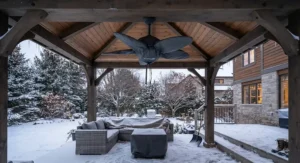
In the first 30 days, the most common mistake is running a new fan on high speed constantly to “test” it — this is unnecessary and accelerates bearing wear on cheaper motors. Break it in gradually across a few speed settings instead. Set a seasonal maintenance rhythm: wipe blades monthly during heavy-use months to prevent dust buildup that throws off balance, check mounting hardware for looseness every spring after winter freeze-thaw cycles, and reverse the motor direction seasonally if your model supports it — clockwise on low in cooler months gently recirculates warm air without a noticeable breeze. Before the first frost, most damp- and wet-rated fans can stay mounted through a Canadian winter, but unplug-and-store units and any fan with exposed remote-control electronics should come down or be capped to avoid moisture intrusion during freeze-thaw cycling.
Real-World Scenarios: Matching a Fan to Your Backyard
Picture three different backyards. First, a young couple in a Calgary townhouse with a compact 10×10 vinyl gazebo used mainly for evening drinks with friends — for them, a 20-28 inch fan like the LANMEL 28″ Outdoor Gazebo Fan or addlon 20″ Outdoor Ceiling Fan covers the space without overwhelming it, and the plug-in simplicity matches a renter-friendly, no-permanent-wiring setup. Second, a family in the Ottawa Valley with a big cedar pergola attached to the house, hosting Sunday dinners for eight to ten people through most of the summer — here the airflow math genuinely favours the Depuley 42″ Outdoor Ceiling Fan or Ohniyou 52″ Smart Ceiling Fan, since a smaller fan just can’t push enough air across that footprint.
Third, a retired couple on Vancouver Island building a permanent, architecturally finished outdoor entertaining space they intend to use nine months of the year — that’s the scenario where the Hunter Mill Valley 52″ earns its higher price tag, because the damp-rated construction and documented airflow numbers pay off over a decade of near-daily coastal humidity exposure rather than a single season. In each case, the “best” fan isn’t the biggest or the cheapest — it’s the one whose blade span and duty rating actually match how often, and how hard, the space gets used.
Problem → Solution: Fixing Common Gazebo Fan Headaches
A few issues come up again and again in aggregated review threads and forum posts, so it’s worth addressing them directly rather than pretending every install goes smoothly.
Problem: the fan wobbles at higher speeds. This is almost always a mounting or balance issue rather than a defective unit — check that the mounting bracket is tightened to spec and that all blades are seated evenly; a cheap blade-balancing kit (often included, sometimes a C$5-10 add-on) fixes most cases in minutes.
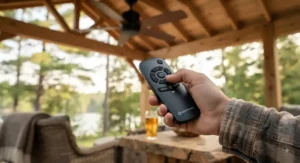
Problem: remote range feels too short outdoors. Open-air structures don’t have walls to bounce a signal off, so effective range often drops by a third compared to an indoor rating; mounting the receiver as high and central as possible, and keeping the remote within direct line of sight, resolves most complaints.
Problem: the fan feels underpowered for the space. This is a sizing mismatch, not a fan quality issue — cross-reference your gazebo’s square footage against the blade-span guidance in the buying framework below rather than assuming a bigger name-brand badge fixes weak airflow.
Problem: motor hum bothers evening conversation. DC-motor models like the addlon 20″ Outdoor Ceiling Fan or Ohniyou 52″ Smart Ceiling Fan run measurably quieter than AC-motor budget units; if noise matters more than upfront price, that’s the upgrade that actually solves it.
Problem: light and fan controls conflict via app or remote. Firmware pairing issues are common on first setup across nearly every brand in this category — a factory reset of the receiver, followed by re-pairing with the phone’s Bluetooth or Wi-Fi off during the fan’s initial power-up window, resolves the vast majority of reported cases.
How to Choose a Gazebo Ceiling Fan: 7 Expert Criteria
What is the best way to choose a gazebo ceiling fan? Match blade span to your structure’s square footage, confirm the weatherproof rating fits your gazebo’s exposure level, and prioritize a reversible, multi-speed motor — then layer in lighting, noise, and control preferences.
- Weatherproof rating first. Damp-rated fans suit covered, partially enclosed structures; wet-rated fans are required for open-sided gazebos and pergolas exposed to direct rain.
- Blade span to square footage. Roughly, 15-20 inches suits under 9 square metres (about 100 sq ft), 28-42 inches suits mid-size structures, and 44 inches-plus suits anything over roughly 22 square metres.
- Motor type. DC motors cost more upfront but run quieter and typically last longer under continuous outdoor duty cycles than budget AC motors.
- Mounting method and structural support. Confirm your beam or bracket can handle the dynamic load of a spinning fan, not just its static weight.
- Control preference. Pull chain is simplest and most failure-resistant; remote adds convenience; app/smart-home control adds flexibility but also another point of potential connectivity failure.
- Lighting needs. A tunable 3CCT or dimmable LED kit can replace a separate patio light entirely, simplifying wiring and reducing clutter.
- Reversibility. A reversible motor extends the fan’s usefulness into the cooler shoulder seasons by gently recirculating warm air instead of creating a cooling breeze.
Gazebo Ceiling Fan vs Pergola Fan vs Patio Ceiling Fan: What’s the Difference
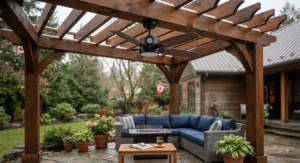
Here’s where a lot of buyers get tangled up in terminology that retailers use almost interchangeably. A gazebo ceiling fan is technically any fan designed to mount to the underside of a gazebo’s solid or semi-solid roof — it’s usually damp-rated because a proper gazebo roof offers meaningful rain protection. A pergola fan faces a tougher job: pergolas are often open-slat structures with partial or no roof coverage, so a true pergola fan generally needs a full wet rating to handle direct sun, wind-driven rain, and temperature swings without a solid barrier overhead. A patio ceiling fan, meanwhile, usually gets mounted to a covered patio that’s structurally part of the house — often under a solid roof extension with more consistent shelter than either a freestanding gazebo or an open pergola, so damp-rated (rather than fully wet-rated) fans are frequently adequate there.
In practice, the actual hardware overlaps heavily — the Depuley 42″ Outdoor Ceiling Fan and Hunter Mill Valley 52″ both work equally well described as a gazebo fan, a pergola fan, or a patio ceiling fan, because their IP65/damp-rated construction covers all three exposure levels reasonably well. The real decision point isn’t the label on the listing; it’s how exposed your specific structure actually is to wind-driven rain. If in doubt, size up your weatherproofing rating rather than down — a wet-rated fan works fine under a fully covered patio, but a damp-rated fan mounted to an open pergola in a coastal or prairie wind corridor is asking for a shortened lifespan.
Common Mistakes When Buying a Gazebo Ceiling Fan
The single most common mistake is buying based on price or looks alone and ignoring the weatherproof rating entirely — a fan rated only for indoor or “damp” covered use, mounted to an open-sided structure, will corrode or fail electrically far faster than its warranty period suggests, and that failure often isn’t covered once water damage is visible. A close second is undersizing: buyers frequently choose a smaller, cheaper fan for a large pergola because it “still spins,” not realizing the airflow-to-area math simply doesn’t work at that scale.
A third mistake is skipping proper electrical protection — running a fan off a household indoor extension cord instead of a CSA-rated outdoor cord with GFCI protection is a genuine safety issue, not just a technicality; Health Canada’s guidance on electrical product safety is worth a read before any outdoor electrical install, gazebo fan or otherwise. Fourth, some buyers overlook mounting compatibility, assuming any fan will attach to any gazebo frame — lightweight aluminum or vinyl-framed gazebos often need reinforcement or a dedicated mounting plate before a 40-plus-inch fan goes up safely. Finally, don’t ignore noise ratings if the gazebo doubles as a relaxation space; the difference between a budget AC motor and a quiet DC motor is genuinely noticeable once you’re sitting under it for hours.
Features That Actually Matter (And Those That Don’t)
Cutting through the marketing copy: weatherproof rating, blade span relative to your space, and motor type (AC vs DC) are the three specs that materially affect your day-to-day experience and the fan’s long-term survival outdoors. Reversibility matters more than most buyers initially think, since it effectively doubles the fan’s useful season. A quality remote or app is genuinely convenient but rarely a dealbreaker either way — pull-chain fans have fewer points of failure and remain a perfectly reasonable choice for a simply-wired setup.
On the “doesn’t matter as much as it sounds” side: an extra colour-temperature setting or two on the light kit is a nice-to-have, not a functional differentiator, since most people settle on one warm-white setting and never touch it again. Similarly, marketing language around “aerodynamic blade design” rarely translates into a measurable real-world difference between two fans of the same span and motor class — it’s the span and motor doing the actual work, not the blade curvature. Bluetooth speaker integration, sometimes bundled into premium models, is a fun bonus but shouldn’t move the needle on a buying decision focused on cooling performance.
Long-Term Cost & Maintenance: Real ROI of an Outdoor Fan
The sticker price is only part of the total cost of ownership. A budget caged fan in the C$70-100 range with an AC motor, run for roughly six hours a day across a five-month Canadian outdoor season, typically costs only a few dollars in electricity annually — the real cost difference between budget and premium fans isn’t operating cost, it’s replacement frequency and weather-related failure risk. A cheaper fan that needs replacing every two to three seasons due to motor or electronics failure in a wet-rated environment can easily cost more over five years than one premium fan bought once.
Looking for the ENERGY STAR mark is a reasonable efficiency shortcut, though it’s worth noting that large-diameter ceiling fans in Canada are regulated for testing and reporting rather than a strict minimum-efficiency threshold — Natural Resources Canada’s page on certified ceiling fans explains how the certification and regulatory framework actually works if you want the full picture before comparing wattage claims across brands. Maintenance costs are modest either way: expect to budget for the occasional blade-balancing kit, a replacement remote battery once a year or so, and — for wet-rated fans left up through winter — a spring inspection of seals and mounting hardware after freeze-thaw cycling. Budgeting C$20-40 a year in incidental upkeep is realistic for most models in this roundup.
Safety, Wiring & Canadian Regulations Guide
Outdoor electrical work carries real risk, and it’s worth treating a gazebo fan install with the same seriousness as any other outdoor electrical project. Always confirm any cord, receptacle, or fan itself carries CSA, cUL, or cETL certification — these marks indicate the product has been independently assessed against Canadian national safety standards, and skipping this check is one of the more common corners cut on DIY installs. GFCI protection is non-negotiable for any outdoor electrical connection, fan included; a portable in-line GFCI adapter is a cheap insurance policy if your exterior outlet doesn’t already have one built in. The Canadian Centre for Occupational Health and Safety’s guidance on electrical safety basics covers extension cord handling, moisture protection, and general precautions that apply directly to a gazebo or pergola fan setup, even for a residential DIY project rather than a workplace.
If you’re hardwiring a fan rather than plugging it in — running a dedicated switched circuit out to a gazebo, for instance — that work generally needs to comply with the Canadian Electrical Code (CSA C22.1) and may require a licensed electrician or a permit depending on your province and municipality; rules vary enough by jurisdiction that it’s worth a quick call to your local building department before drilling into a beam. For plug-in models, keep cords elevated off wet grass or snow, avoid daisy-chaining multiple extension cords together, and unplug during severe storms even if the fan itself is wet-rated, since lightning risk has nothing to do with a fan’s IP rating.
Backyard Gazebo Ideas: Garden Structure Accessories That Pair With a Ceiling Fan
A ceiling fan rarely lives alone — it’s usually one piece of a bigger backyard gazebo idea taking shape. Layering in the right garden structure accessories multiplies the payoff of the fan itself. String or festoon lighting mounted around the gazebo’s perimeter complements a fan’s built-in light kit rather than competing with it, giving you ambient light at the edges and functional light-plus-airflow in the centre. Retractable or roll-up privacy screens turn a fully open-sided gazebo into something closer to a wet-rated pergola in terms of exposure, which is worth factoring into which fan rating you actually need — screens reduce wind-driven rain exposure meaningfully, sometimes enough to justify a damp-rated fan over a wet-rated one.
Other accessories worth budgeting for alongside the fan: a weatherproof outlet cover or exterior-rated junction box if you’re running any hardwired connection, a ceiling medallion or decorative mounting plate to dress up the point where the fan meets a plain wooden beam, and citronella or bug-deterrent accessories mounted away from the fan’s direct airflow path, since strong airflow can actually reduce the effectiveness of scent-based deterrents by dispersing them too quickly. If your gazebo idea includes a fire feature or heater for shoulder-season use, position the fan’s reversible “warm air recirculation” mode to work with that heat source rather than blowing it straight back outside.
Designing Outdoor Entertaining Spaces Around Your Gazebo Fan
Once airflow is solved, a gazebo or pergola stops being a hot box and starts becoming genuinely one of the better outdoor entertaining spaces on the block — which changes how you plan the rest of the layout. Position seating and dining areas directly under or just off-centre from the fan’s sweep rather than at the structure’s edges, where airflow drops off fastest. If you’re hosting groups larger than four or five regularly, that’s a strong argument for the wider-span options like the Depuley 42″ Outdoor Ceiling Fan or Ohniyou 52″ Smart Ceiling Fan over the compact 15-20 inch units, since entertaining spaces need even coverage across a bigger footprint, not just a cool spot directly under the fixture.
Lighting layering matters here too — a fan’s built-in dimmable kit handles ambient light beautifully for evening dinners, but task lighting over a bar cart or serving table is worth adding separately so the whole space isn’t dependent on one dimmer setting. And don’t underestimate acoustics: a quieter DC-motor fan matters disproportionately once you add six dinner guests’ worth of conversation and maybe some background music — a loud AC motor humming under all that becomes fatiguing over a three-hour dinner in a way it never does during a quick solo coffee break.
Frequently Asked Questions
❓ Do I need a wet-rated or damp-rated fan for my gazebo?
❓ What size gazebo ceiling fan do I need for a 10×10 gazebo?
❓ Can a gazebo ceiling fan stay outside all winter in Canada?
❓ Is a DC motor worth the extra cost on an outdoor ceiling fan?
❓ Do gazebo ceiling fans need a licensed electrician to install?
Conclusion
A gazebo ceiling fan is one of those small purchases that quietly reshapes how much you actually use an outdoor space you already built or bought. The right choice isn’t about chasing the biggest blade span or the flashiest app — it’s about honestly sizing your structure, matching the weatherproof rating to your real exposure level, and being realistic about how much you’ll value quiet operation versus a lower price tag. Budget caged units like the PAZALA 15″ Caged Gazebo Fan solve a real problem for small spaces and tight budgets, mid-range picks like the addlon 20″ Outdoor Ceiling Fan and Depuley 42″ Outdoor Ceiling Fan cover most typical Canadian backyard gazebos and pergolas, and premium options like the Hunter Mill Valley 52″ earn their price for buyers building something meant to last a decade of Canadian summers.
Whatever you land on, treat the electrical side of the install with real seriousness — a CSA-certified cord, GFCI protection, and an honest look at your structure’s exposure will do more for the fan’s lifespan than any spec on the box. Get that right, and the rest is just deciding how much airflow, light, and quiet you want over your next backyard dinner.
✨ Don’t Miss These Exclusive Deals!
🔍 Take your outdoor living space to the next level with the picks above. Click on any highlighted product to check current pricing and availability on Amazon.ca — a small upgrade that pays off every warm evening you spend outside.
Recommended for You
- 7 Best Wet Rated Ceiling Fan Picks for Canadian Patios
- Best Outdoor Ceiling Fan Picks: 7 Top Choices for Canada (2026)
- Ceiling Fan Without Light Kit: 7 Top Picks for Canada (2026)
Disclaimer: This article contains affiliate links. As an Amazon Associate, I earn from qualifying purchases. If you purchase products through these links, we may earn a small commission at no additional cost to you.
✨ Found this helpful? Share it with your friends! 💬🤗
