

In This Article
If you’ve ever lain in bed watching your ceiling fan do its best impression of a hula dancer, you know the frustration. A ceiling fan won’t wobble when it’s properly installed, balanced, and built to a solid standard — but getting there takes knowing what actually causes the problem and which products genuinely fix it. In Canada, where homes range from century-old Victorian builds in Toronto to new open-concept builds in Calgary suburbs, the causes and solutions for a wobbly fan vary more than most homeowners expect.
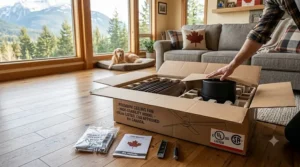
A ceiling fan won’t wobble when four conditions are met: the mounting hardware is fan-rated, the blades are balanced, the blade arms are straight, and installation is done correctly. Miss any one of these, and you’ll hear that rhythmic thumping every time you run it above low speed. The good news? Most wobble problems cost under $20 CAD to fix — or can be avoided entirely by choosing the right fan from the start.
This guide covers both angles. We’ll walk through the top 7 stable ceiling fans and balancing kits available on Amazon.ca, explain the real-world causes of ceiling fan wobble (including some that most listings won’t tell you), and give you a practical framework for solving the problem whether you’re dealing with a brand-new fan or one that’s been shaking since the Raptors last won a championship. Prices are listed in Canadian dollars (CAD) where referenced.
Quick Comparison: Best Stable Ceiling Fans & Balancing Kits on Amazon.ca (2026)
| Product | Type | Blade Span | Best For | Price Range (CAD) |
|---|---|---|---|---|
| Hunter Downtown 51590 | Heavy-duty ceiling fan | 152 cm (60″) | Large rooms, great rooms | $$$$ |
| Hunter Low Profile III 53069 | Flush-mount stable fan | 132 cm (52″) | Low-ceiling rooms | $$ |
| Hunter Swanson 50905 | Mid-range stable fan | 112 cm (44″) | Bedrooms, medium rooms | $$ |
| HFYHWT 20PCS Balancing Kit | Balancing kit | N/A | Fixing existing wobble | $ |
| 6-Set Blade Balance Kit (B09DKJWDC6) | Multi-set balancing kit | N/A | Multi-fan households | $ |
| Westinghouse Comet Series | Mid-range stable fan | 132 cm (52″) | Budget-conscious buyers | $$ |
| Westinghouse 77015 / Gen. Lighting Kit | Replacement balancing kit | N/A | Single-fan quick fix | $ |
Price key: $ = under $25 CAD, $$ = $100–$250 CAD, $$$$ = $350+ CAD. All prices approximate — check current pricing on Amazon.ca.
The table above highlights a clear split: fans engineered for wobble-free performance from the factory sit at a higher price point, while balancing kits offer an affordable solution for fans that develop wobble over time. If your current fan is less than five years old and started wobbling recently, a $10–$20 balancing kit is almost certainly all you need. If you’re buying new and want to avoid the problem entirely, investing in a Hunter or Westinghouse fan with a built-in wobble-free guarantee pays off over the lifetime of the product.
💬 Just one click — help others make better buying decisions too! 😊
✨ Don’t Miss These Exclusive Deals!
🔍 Take your ceiling comfort to the next level with these carefully selected products. Click on any highlighted item to check current pricing and availability on Amazon.ca. These fans and kits will help you create a quiet, stable home environment your whole family will love!
Top 7 Ceiling Fans & Balancing Kits: Expert Analysis for Canadian Buyers
1. Hunter Downtown 51590 60-Inch Ceiling Fan
The Hunter Downtown 51590 is the closest thing to a “set it and forget it” ceiling fan for large Canadian spaces — it’s engineered from the ground up so a ceiling fan won’t wobble, even at top speed. The 152 cm (60″) blade span moves serious air through open-concept living rooms, lofts, and great rooms, while the SureSpeed Guarantee means Hunter backs its airflow performance with measurable claims: over 33% higher air velocity than leading competitors, according to Hunter’s own testing standards.
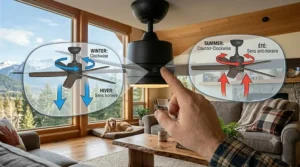
The 6-speed DC reversible motor is the real differentiator here. DC motors run cooler, quieter, and more efficiently than AC motors — this matters in Canada where heating-season reverse mode (running the fan clockwise to push warm air downward) is genuinely useful for six or more months of the year. You’re not just cooling a room in July; you’re redistributing furnace heat in January in Winnipeg. The motor also runs at a whisper-quiet level that most competing fans in this size category simply can’t match.
Installation uses a standard 15 cm (6″) downrod and is rated for both indoor and outdoor covered use — handy for covered patios in BC or screened-in porches in Ontario. What most Canadian buyers overlook is the weight: larger fans like this require a fan-rated junction box, rated to support at least 32 kg (70 lbs) of dynamic load, which older Canadian homes may not have. Budget an extra $25–$40 CAD for a proper fan-rated box if you’re replacing a light fixture.
Customer feedback consistently praises the noise level and build quality. A few reviewers note the instruction manual could be more detailed for first-time installers.
✅ Whisper-quiet DC motor with 6-speed control
✅ SureSpeed Guarantee — verified higher airflow performance
✅ Dual indoor/outdoor rating for versatile Canadian installations
❌ Premium price point — not for budget-conscious buyers
❌ Larger installation footprint requires fan-rated junction box
Price range: In the upper $300–$400+ CAD range — check current price on Amazon.ca. A worthwhile investment for rooms over 37 m² (400 sq. ft.).
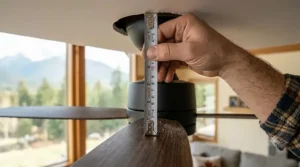
2. Hunter Low Profile III 53069 52-Inch Ceiling Fan
For the countless Canadians living in condos, older bungalows, or basement conversions where ceiling height is at a premium, the Hunter Low Profile III 53069 solves a real problem. It’s a flush-mount (hugger) design that sits tight to the ceiling, yet Hunter’s exclusive motor and hanging system ensure the fan remains wobble-free — an engineering feat that budget flush-mount fans often fail at. Low-profile fans are inherently more prone to wobble because they lack the stabilizing length of a downrod; Hunter’s design compensates for this with reinforced internal geometry.
The 132 cm (52″) blade span handles rooms up to about 45 m² (485 sq. ft.) at standard ceiling heights — that covers most Canadian master bedrooms and living rooms in townhomes and condos. Three fan speeds and a reversible motor give year-round utility. The five reversible white/white blades offer a clean, neutral aesthetic that works in virtually any décor.
What makes this stand out for budget-conscious Canadians is the Limited Lifetime Motor Warranty. Hunter has over 135 years in the business, and that warranty is backed by a company with actual Canadian customer service infrastructure — not a no-name offshore brand that disappears after your return window closes. For someone furnishing a rental property or a secondary bedroom, this represents exceptional long-term value.
Buyers report easy installation, with the three-position mounting system accommodating standard, low, and angled ceilings — useful in older Canadian homes with non-standard architecture.
✅ Flush-mount design for low ceilings — no downrod needed
✅ Wobble-free guarantee with Limited Lifetime Motor Warranty
✅ Clean, neutral aesthetic suits most Canadian home styles
❌ No remote control included — pull chain only
❌ Lower airflow than downrod-mounted fans at equivalent blade size
Price range: In the $130–$180 CAD range — strong value for a name-brand, wobble-free flush mount. Check current Amazon.ca pricing.
3. Hunter Swanson 50905 44-Inch Ceiling Fan with LED Light
The Hunter Swanson 50905 hits the sweet spot between price, features, and stability — making it the most versatile pick on this list for average Canadian rooms. The 112 cm (44″) blade span is ideal for bedrooms and medium-sized rooms up to about 23 m² (250 sq. ft.), and the fan is certified wobble-free with Hunter’s WhisperWind motor technology. The three-position mounting system (standard, low, or angled) handles the slightly pitched ceilings common in older Ontario and Quebec homes.
The integrated dimmable LED light kit is a genuine bonus. Fully dimmable, energy-efficient LED bulbs mean you’re replacing two fixtures — light and fan — for the price of one, and you never need to hunt down a compatible bulb later. For Canadians heating their homes eight months a year, the reversible motor in winter mode makes a noticeable difference in comfort: warm air pooling near the ceiling gets redistributed downward, reducing reliance on the furnace.
In my assessment, the Swanson is the fan most Canadian buyers should start with. It’s not flashy, but it delivers exactly what it promises: wobble-free, quiet operation with a light kit, backed by Hunter’s reputation and warranty. The spec sheet lists it as part of the Professional Series, which means tighter manufacturing tolerances and better blade balance right out of the box compared to entry-level models.
Customer reviews highlight the easy installation and quiet operation. Some note the LED light, while energy-efficient, isn’t the brightest option for rooms used as primary workspaces.
✅ WhisperWind motor — genuinely quiet wobble-free operation
✅ Three-position mounting for standard, low, and angled ceilings
✅ Dimmable LED included — great value for the price
❌ 44″ span limits it to medium and smaller rooms
❌ LED brightness may not suit rooms doubling as offices
Price range: In the $100–$160 CAD range on Amazon.ca — excellent value for this feature set.
4. HFYHWT 20PCS Ceiling Fan Balancing Kit
This is the kit to buy if you already have a fan and just want to stop the wobble without spending $200 on a replacement. The HFYHWT 20PCS kit includes five resilient plastic clips for testing and 15 metal self-adhesive 3g weights for permanent correction — giving you enough to work through multiple blades methodically, rather than running out of test clips mid-process. The “high calibration” claim refers to the weights being consistent in mass, which matters more than most buyers realize: cheap kits with poorly cast weights can actually make balance worse if the 3g weight varies significantly between pieces.
The process is straightforward: attach the clip to the trailing edge of a blade midway between the motor hub and the blade tip, run the fan, and observe whether wobble improves, worsens, or stays the same. Move systematically through each blade until you find the one that improves stability with the clip attached, then fine-tune the position along that blade. Once identified, replace the clip with the permanent adhesive weight. The entire process takes 20–40 minutes and requires no tools beyond a ladder — which makes it a legitimately accessible Saturday afternoon fix for most Canadian homeowners.
What most buyers overlook: clean the blades before balancing. Even light dust accumulation (especially common in Canada’s dry winter indoor air) can add enough uneven weight to throw off your readings. Wipe each blade with a damp cloth, let it dry, then proceed with the balancing process.
Canadian reviews note reliable adhesive performance, though some in very humid coastal BC locations report checking the weights after the first season.
✅ 5 clips + 15 weights — enough for thorough testing
✅ Consistent 3g weights for reliable balance correction
✅ Simple process, no tools required beyond a ladder
❌ Plastic clips can feel flimsy — handle gently during testing
❌ Not enough weights if fan has more than 5 blades with multiple problem spots
Price range: Under $15 CAD on Amazon.ca — easily the best-value fix for wobble.
5. 6-Set Ceiling Fan Blade Balance Kit (B09DKJWDC6)
If you’re maintaining multiple fans in a larger Canadian home, a rental property, or a commercial space, the 6-set kit with 6 clips and 18 adhesive weights is the smarter buy over individual single kits. The 3g self-adhesive metal weights are the industry standard for ceiling fan balancing, and having six complete sets means you can address every fan in the house in one session — and have spares for when a weight eventually lets go (rare, but it happens in high-humidity environments like bathrooms or covered patios).
The compact size of these weights (approximately 2 cm × 1.8 cm each) means they sit flat against the blade surface without disrupting airflow or aesthetics — you won’t see them from normal viewing angles. This is notably better than the DIY coin-tape method, which adds uneven and often excessive mass. The physics here matters: you want to add the minimum weight necessary to correct imbalance, not pile on as much as possible.
For Canadian landlords managing multiple rental units, this kit represents a legitimate maintenance investment. A wobbly ceiling fan is one of the most common tenant complaints, and a $15 CAD kit addresses most cases without calling in an electrician. The “strong adhesive” claim is broadly accurate based on reviewer feedback, though I’d recommend pressing the weight firmly for 30 seconds and allowing 24 hours of cure time before running the fan, especially in cooler Canadian homes where adhesive can set more slowly.
✅ Six complete sets — ideal for multi-fan households or rental properties
✅ 3g weights are precise enough for fine balance correction
✅ Compact, low-profile weights don’t affect appearance
❌ No detailed written instructions included in some shipments
❌ Adhesive sets slowly in cooler Canadian homes — allow full cure time
Price range: In the $12–$20 CAD range on Amazon.ca — great bulk value.
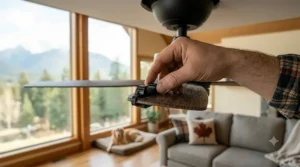
6. Westinghouse Comet Series 52-Inch Ceiling Fan
The Westinghouse Comet brings the brand’s decades of reliability to a mid-range 132 cm (52″) package that delivers smooth, stable performance without requiring the premium Hunter price. Westinghouse uses reliable AC motors that provide steady air circulation with minimal wobble when correctly installed — and the Comet’s 4.4-star Amazon rating across 1,200+ reviews reflects that real-world performance. It’s not engineered to the same tolerance level as Hunter’s SureSpeed line, but for the price point and typical Canadian residential use, it’s more than adequate.
What stands out about Westinghouse for Canadian buyers is availability. The brand is consistently stocked at both Amazon.ca and Canadian home improvement retailers like Home Depot Canada, meaning replacement parts and warranty service don’t require cross-border shipping gymnastics. The Canadian Electrical Code (CEC) compliance is also verified on Westinghouse products sold in Canada — something worth confirming with any ceiling fan purchase, as some discount imports marketed online don’t carry appropriate Canadian certifications.
The Comet is the right choice for a buyer who wants a solid, no-fuss fan in a neutral finish, doesn’t need premium airflow performance, and wants the confidence of a recognizable brand with Canadian distribution. Installation instructions could be more detailed — a common critique across Westinghouse models — so first-time installers may want to supplement with a YouTube walkthrough before starting.
Customer feedback is broadly positive, with setup time and quiet operation cited most often. Negative reviews most commonly reference the instruction manual quality.
✅ 4.4-star Amazon rating with strong real-world feedback
✅ Widely available at Amazon.ca and Canadian hardware stores
✅ CEC-compliant for Canadian electrical installations
❌ Instruction manual quality lower than competitors
❌ Not a premium airflow performer at higher speeds
Price range: In the $130–$200 CAD range on Amazon.ca — solid mid-range value.
7. Westinghouse 77015 Fan Blade Balancing Kit (Single Kit)
The Westinghouse 77015 is the classic, time-tested solution for a fan that wobbles — two 5g adhesive weights and one balancing clip, packaged simply and sold at a price point that makes it a no-brainer to keep in the toolbox. It’s the brand that Hunter fans used to include inside the box, and for good reason: the clip is robust enough to stay attached during testing without flying off at speed (an issue some cheaper alternatives have), and the 5g weights are slightly heavier than the 3g standard, which can be advantageous for fans with more pronounced imbalance.
The heavier 5g weight is a double-edged consideration, however. If your fan needs only minor correction, a 5g weight may overcorrect — you may need to cut the weight down or layer smaller weights from a supplementary kit. For fans with significant imbalance from warped blades or misaligned blade irons, the extra mass is exactly what’s needed. Based on Canadian reviewer feedback, the clip durability is occasionally inconsistent — one reviewer noted the clip broke during first use, though this appears to be a minority experience.
For a Canadian buyer who just needs a quick, reliable fix for one fan and doesn’t want to think about it further, the Westinghouse 77015 is the most straightforward option. It’s available on Amazon.ca and at Home Depot Canada locations nationally — so if your fan starts wobbling on a Friday afternoon, you can often have the fix in hand the same day.
✅ Proven design with decades of real-world use
✅ Available at Amazon.ca and in-store at Home Depot Canada
✅ 5g weights suitable for more pronounced imbalance cases
❌ Only one clip included — not enough for systematic multi-blade testing
❌ 5g may overcorrect minor imbalance — less fine-tunable than 3g kits
Price range: Under $15 CAD — check current Amazon.ca pricing.
Why Your Ceiling Fan Wobbles: A Practical Diagnosis Guide for Canadian Homeowners
Understanding what actually causes ceiling fan wobble is the single most important step before spending any money. In my experience reviewing this topic, the most common mistake Canadian homeowners make is jumping straight to a balancing kit when the real problem is a structural installation issue — and balancing weights cannot fix a loose mounting bracket.
The Wrong Junction Box (The #1 Hidden Cause)
This is the cause that almost nobody talks about until something goes wrong. A standard plastic electrical box designed for a light fixture is rated for static loads of 7–16 kg (15–35 lbs). Most ceiling fans — especially anything with a light kit — can approach or exceed 16 kg in static weight alone, and the rotational force (dynamic load) generated by spinning blades multiplies the stress considerably. According to contractor surveys cited in installation guides, roughly 30% of persistent ceiling fan wobble cases can be traced back to a fan installed on a non-fan-rated junction box.
In Canada, the Canadian Electrical Code (CEC) requires fan-rated boxes for ceiling fan installations — a fan-rated metal box is typically stamped “Acceptable for Fan Support” and rated to support dynamic loads up to 32 kg (70 lbs). If your fan is installed in an older Canadian home that previously had only a light fixture, there is a real chance the existing box is not fan-rated. A proper fan-rated box costs $15–$35 CAD at Home Depot Canada and takes about 30 minutes to swap in.
Blade Imbalance
Even a small difference in blade weight — as little as a few grams — creates noticeable vibration at higher speeds. This can result from manufacturing variation (blades are rarely perfectly matched in mass), dust accumulation concentrated on certain blades, moisture absorption causing blade warping, or minor damage from cleaning. This is the problem that a balancing kit solves, and it’s the most common cause in fans that have been running fine for years and recently developed wobble.
Loose Blade Arms and Blade Screws
Blade arms (the brackets connecting blades to the motor hub) are held by small screws that can loosen over time from vibration. A blade arm that’s even slightly loose creates a wobble that no amount of balancing weight will fix. This is a five-minute fix with a screwdriver — and should always be the first thing you check before buying any product. Turn off the breaker, get on a ladder, and methodically tighten every blade screw and blade arm mounting screw.
Warped Blades
Wood and wood-composite fan blades are susceptible to warping in Canadian conditions — both the humidity swings between winter (dry, heated indoor air) and summer (humid), and the temperature extremes in uninsulated spaces like garages and covered patios. A warped blade rotates at a slightly different angle than its neighbours, creating aerodynamic imbalance that no adhesive weight fully corrects. Check blade flatness by removing each blade and laying it on a flat surface. If it rocks noticeably, consider replacing that blade.
Loose Canopy or Downrod
The decorative canopy covering the ceiling mount can rattle and shake if its set screws are loose, amplifying even minor motor vibration into an apparent wobble. Similarly, the downrod connection to the motor housing can work loose over time. These are easy checks that take two minutes and require only a screwdriver.
Step-by-Step: How to Balance a Ceiling Fan (Canadian DIY Guide)
Balancing a ceiling fan is one of the most accessible DIY home repairs you can do — no electrical knowledge required, no special tools beyond a screwdriver and a ladder. Here’s a methodical process that works for virtually any fan available on Amazon.ca.
Step 1: Safety first — turn off power at the breaker. Don’t just use the wall switch; flip the circuit breaker for the room. Verify power is off with a non-contact voltage tester if you have one. Wait for blades to stop completely before touching anything.
Step 2: Clean all blades. Use a damp cloth with mild cleaning solution to wipe both the top and bottom surfaces of every blade. In Canadian homes, dry winter air creates significant dust accumulation on fan blades — sometimes enough to add 2–3g of unevenly distributed weight. Let blades dry completely before proceeding.
Step 3: Tighten all screws. Check the mounting bracket screws at the ceiling, the downrod connection, the blade arm screws at the motor hub, and the blade screws on the blade arms. Give each a firm quarter-turn tighten with a screwdriver. Do not over-tighten into wood.
Step 4: Check blade alignment. Using a ruler or measuring tape, measure the distance from the ceiling to the leading edge of each blade tip. All blades should be within 3 mm (1/8″) of each other. If one is significantly different, its blade arm may be bent — gently bend it back to alignment.
Step 5: Attach the balancing clip. Place the clip from your balancing kit on the trailing edge of Blade 1, halfway between the motor hub and the blade tip. Restore power. Run the fan on medium or high speed for 30 seconds. Observe: did wobble improve, worsen, or stay the same? Turn off power.
Step 6: Test each blade systematically. Move the clip to Blade 2, 3, 4, and 5 in sequence, running the fan each time. Note which blade position produces the least wobble with the clip attached — that’s your problem blade.
Step 7: Fine-tune the position. With the clip on the problem blade, move it in small increments toward the motor hub and toward the tip, testing after each move. The position that produces the smoothest operation is where your permanent weight goes.
Step 8: Apply the adhesive weight. Remove the clip. Press the adhesive weight firmly against the top surface of the blade at the identified position. Hold for 30 seconds. Allow at least 2 hours (longer in cool Canadian homes — adhesive sets more slowly below 15°C / 59°F) before running the fan.
Step 9: Test at all speeds. Restore power and run the fan at low, medium, and high speeds. A well-balanced fan should run smoothly at all speeds with no visible wobble.
Canadian Homeowner Scenarios: Which Product Fits Your Situation?
Canadian homes vary enormously — from heritage Toronto semis to new builds in Saskatoon to drafty farmhouses in rural Nova Scotia. Here’s how to match the right solution to your specific situation.
Profile 1: Condo owner in Vancouver or Montreal with an existing fan that recently started wobbling. You’ve had the fan for three years, it was fine until last winter, and now it wobbles on medium and high. Classic blade imbalance from moisture cycling. Buy the HFYHWT 20PCS Balancing Kit (under $15 CAD on Amazon.ca). Spend 30 minutes on a Saturday following the steps above. 95% chance your problem is solved.
Profile 2: Suburban Calgary family upgrading a bedroom fan in a new build. Your ceiling height is standard (2.4 m / 8 ft), the room is about 18 m² (190 sq. ft.), and you want a reliable, quiet fan with a light. The Hunter Swanson 50905 is your answer — mid-range price, wobble-free guarantee, dimmable LED included, and Hunter’s lifetime motor warranty gives you peace of mind.
Profile 3: Ottawa homeowner with an open-concept main floor (great room over 37 m²). You need serious airflow in a large space and won’t tolerate a fan that wobbles at high speed. The Hunter Downtown 51590 60-inch is built for exactly this. Before buying, verify your existing junction box is fan-rated — Canadian homes built before 2000 frequently have light-fixture-only boxes that can’t support a heavy fan safely.
Profile 4: Landlord managing five rental units in Hamilton. You need reliable fans at a reasonable price point with easy maintenance. The Westinghouse Comet at mid-range CAD pricing and the 6-Set Balancing Kit for ongoing maintenance is the right combination. Westinghouse parts are available nationally at Canadian hardware stores, which matters when a tenant calls about a wobbling fan on a Wednesday afternoon.
Profile 5: DIYer in rural Prince Edward Island who has already tried balancing but the fan still wobbles. If a balancing kit didn’t fix it, the problem is structural. Check the junction box first — if it’s a plastic box stamped for light fixtures only, that’s your problem. A fan-rated metal box from Home Depot Canada will solve it. If the box is already fan-rated, check the blade arms for bends and the mounting bracket for looseness.
How to Choose a Stable Ceiling Fan in Canada: 6 Key Criteria
1. Motor Type: DC vs. AC
DC motors cost more upfront but run significantly cooler, quieter, and more efficiently than traditional AC motors. In a country where ceiling fans run in reverse mode for half the year pushing warm air down from heated ceilings, a DC motor’s efficiency advantage compounds over time. For a bedroom fan running 8–10 hours daily, a DC motor can save 30–40% in energy costs versus a comparable AC model. If the price difference is $50–$80 CAD, the DC motor pays for itself within a few years.
2. Fan-Rated Mounting Compatibility
Before buying any ceiling fan, verify your existing junction box is fan-rated. If it isn’t, budget $15–$35 CAD for a replacement. A non-fan-rated box is both a safety hazard (under the Canadian Electrical Code) and the root cause of wobble that no product can fix.
3. Blade Span for Room Size
Match blade span to room area for optimal airflow and stability. As a guide: up to 9 m² (100 sq. ft.) — 91 cm (36″); 9–23 m² — 112–132 cm (44–52″); 23–37 m² — 137–152 cm (54–60″); over 37 m² — consider two fans or a 152 cm+ commercial-grade unit.
4. Wobble-Free Guarantee and Warranty
Not all “lifetime warranties” are equal. Hunter’s Limited Lifetime Motor Warranty is one of the strongest in the category and is honoured through Canadian customer service channels. Westinghouse offers solid but shorter warranties. No-name brands on Amazon.ca may not have any Canadian warranty infrastructure at all — if the blade arms warp in year two, you’re buying a new fan.
5. Reversible Motor for Canadian Winters
A reversible motor is not optional in Canada — it’s essential. Running a fan clockwise at low speed in winter pushes warm air that’s pooled near the ceiling back down into the living space. According to Natural Resources Canada (NRCan), this can reduce heating costs by up to 15% by allowing you to lower the thermostat a degree or two without losing comfort. For more on home energy efficiency, visit NRCan’s home energy efficiency resources.
6. Certifications for Canadian Safety Standards
Look for fans carrying CSA (Canadian Standards Association) or cETL certification for Canadian electrical code compliance. Fans with only UL listing (American certification) are technically compliant in most Canadian provinces as well, but CSA-certified products have been specifically tested to Canadian standards. For outdoor or damp-rated installations (covered patios, gazebos, sunrooms), confirm the fan carries a damp or wet rating appropriate for Canadian climate exposure.
Common Mistakes When Buying a Ceiling Fan (And How to Avoid Them)
Buying the largest fan the room can physically accommodate. Bigger is not always better. An oversized fan in a low-ceiling room creates turbulence and noise rather than smooth airflow. Use the blade-span-to-room-size guide above and match accordingly. A 132 cm (52″) fan in a 14 m² bedroom will be loud and choppy — a 112 cm (44″) fan will be smooth and effective.
Ignoring the junction box. This is the single most expensive mistake Canadian homeowners make with ceiling fan installations. Installing a 4.5 kg (10 lb) fan on a plastic light-fixture box rated for 7 kg (15 lbs) static load is a safety issue — one that the Canadian Electrical Code specifically addresses. A fan-rated box is a $20 CAD fix that most home improvement sites skip mentioning.
Choosing based on appearance alone. Decorative fans with highly stylized blade designs — palm frond shapes, irregular sizes, unusual materials — are often harder to balance and more prone to wobble than standard rectangular blade fans. If aesthetic is important to you, test the fan’s reviews specifically for wobble complaints before buying.
Cross-border shopping without checking warranty coverage. A fan purchased from Amazon.com and shipped to Canada may void its warranty, require 120V adapters (Canadian standard is 120V so this is usually fine), or require cross-border returns at your expense. Amazon.ca is the correct platform for Canadian buyers — it ensures correct voltage, and eligible purchases carry Amazon.ca’s standard return policy.
Skipping the balancing process after installation. Even brand-new fans from reputable manufacturers can benefit from a balancing check after installation. Blade weights vary slightly in manufacturing, and shipping can cause minor blade arm misalignment. Running a balancing kit check on a new fan takes 20 minutes and can prevent months of low-level wobble and motor wear.
Long-Term Maintenance & Cost Analysis for Canadian Ceiling Fan Owners
A quality ceiling fan, properly maintained, can last 10–15 years with minimal issues. The economics are compelling: a mid-range fan at $150 CAD amortized over 12 years works out to roughly $12.50 per year, plus electricity. At Canadian residential electricity rates averaging $0.13–$0.17/kWh (varying by province — Quebec is significantly lower, Ontario higher), a 60-watt AC motor ceiling fan running 8 hours daily costs approximately $21–$30 CAD per year. A comparable DC motor fan at 30 watts cuts that to $10–$15 CAD annually — a savings of $10–$15 per year, or $120–$180 over the fan’s lifetime.
Maintenance schedule for Canadian conditions:
- Every 3–4 months: Wipe blades clean (dust accumulation is heavier in dry winter months with forced-air heating)
- Annually (spring and fall): Check and tighten all screws — vibration works them loose over one to two seasons
- Every 2–3 years: Re-check blade balance with a balancing clip — natural warping from humidity cycling affects most Canadian homes
- Every 5 years: Inspect the mounting bracket and junction box for any signs of fatigue or loosening
The balancing kit investment ($10–$20 CAD) is the highest-return maintenance spend for any ceiling fan owner. A well-balanced fan runs quieter, places less stress on the motor bearings, and lasts considerably longer than one that’s been wobbling for years unaddressed.

Frequently Asked Questions
❓ What is the most common reason a ceiling fan wobbles in Canada?
❓ Do I need a special junction box to install a ceiling fan in Canada?
❓ Are ceiling fan balancing kits available on Amazon.ca and do they ship across Canada?
❓ Can running a ceiling fan in winter actually help lower heating bills in Canada?
❓ What should I check first if a brand-new ceiling fan wobbles right after installation?
Conclusion: Getting Your Ceiling Fan Won’t Wobble — Right the First Time
A ceiling fan won’t wobble when installation is correct, hardware is appropriate, and blades are balanced — three conditions that are entirely within any Canadian homeowner’s control. Whether you’re diagnosing an existing fan with a sudden case of the wobbles or shopping for a new fan and determined to avoid the problem from day one, the right products and the right process make all the difference.
For most Canadian homeowners dealing with a wobbling fan, a $10–$15 CAD balancing kit on Amazon.ca is all that’s needed. For buyers starting fresh, the Hunter lineup — particularly the Hunter Swanson 50905 for bedrooms and the Hunter Downtown 51590 for large open spaces — offers the most reliable wobble-free engineering in the category, backed by genuine warranty support in Canada. Westinghouse offers strong mid-range value with consistent Canadian availability.
Don’t overlook the junction box. It’s the unglamorous foundation of every stable ceiling fan installation, and in Canada’s older housing stock, it’s the hidden cause of more wobble complaints than any brand or product failure. A $25 CAD fan-rated box is the best insurance policy you can buy.
✨ Don’t Miss These Exclusive Deals!
🔍 Ready to stop the wobble for good? Click on any highlighted product above to check current pricing and availability on Amazon.ca. Whether you need a quick balancing fix or a full fan upgrade, these carefully selected products will have your home running quietly and efficiently!
Recommended for You 🇨🇦
- Best Bladeless Ceiling Fan in Canada 2026: 7 Safest, Sleekest Picks
- Best Compact Ceiling Fan for Bedroom in Canada 2026
- Best Ceiling Fan for Primary Bedroom Canada 2026: Top 7 Picks
Disclaimer: This article contains affiliate links. As an Amazon Associate, I earn from qualifying purchases. If you purchase products through these links, we may earn a small commission at no additional cost to you.
✨ Found this helpful? Share it with your friends! 💬🤗
